
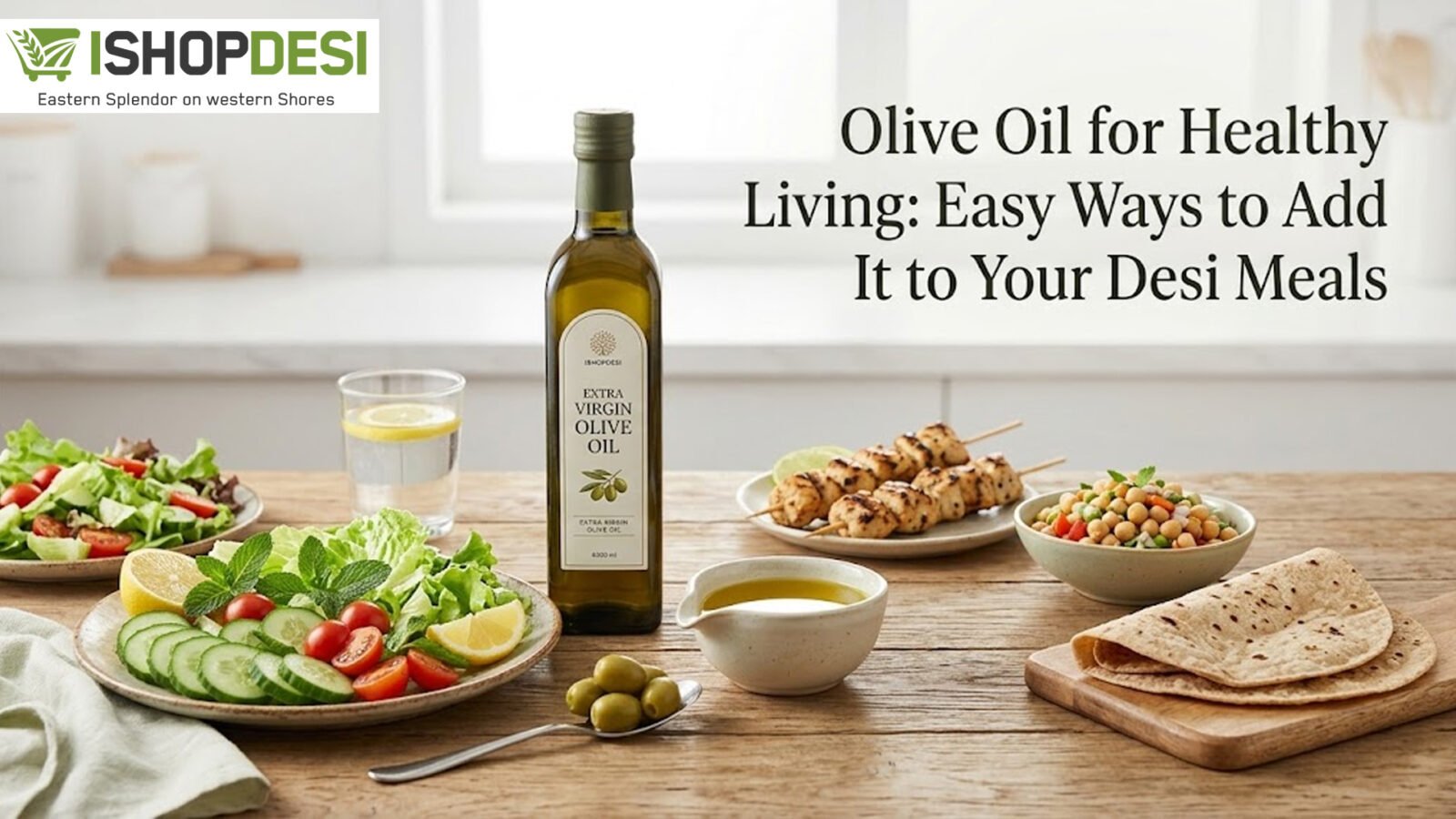
A simple kitchen upgrade that can make everyday Desi cooking feel lighter, fresher, and more balanced 🫒
In many Desi homes, food is more than just a meal. It is comfort, routine, family time, tradition, and sometimes the best part of the day. From a warm plate of daal chawal to a freshly cooked sabzi, grilled chicken, paratha rolls, and weekend biryani, our meals are full of flavour and memories. But as more families become conscious about healthy living, one question comes up often: how can we make everyday Desi food a little lighter without losing the taste we love?
One simple answer is olive oil.
Now, this does not mean every traditional recipe needs to be changed completely. Desi food does not have to become boring to be healthier. The real goal is to make small, smart changes that support a more balanced diet while keeping your meals familiar, satisfying, and family-friendly. Adding olive oil to your kitchen can be one of those easy changes.
Why Olive Oil Fits Into a Healthy Living Routine
Olive oil is popular because it is a plant-based oil often used in Mediterranean-style eating. Many people choose it as a lighter option for daily meals, especially when they want to reduce heavy, greasy cooking habits.
For Desi families, the biggest benefit is not about following a strict diet. It is about improving everyday food choices. When used in the right amount, olive oil for cooking can help you prepare meals that feel cleaner, fresher, and less oily.
The key is balance. Using olive oil does not automatically make every meal healthy. A deep-fried snack is still a deep-fried snack, even if it is cooked in a better oil. But when you use it for simple home cooking, light sautéing, salads, grilled foods, and marinades, it can become a practical part of your healthy living routine.
Can Olive Oil Be Used in Desi Cooking?
Yes, olive oil can be used in many Desi meals, but it works best when you use it wisely.
Some people think olive oil for Desi cooking will change the taste of every dish. That depends on the type of oil and the recipe. Extra virgin olive oil has a stronger flavour, so it is better for salads, dips, chutney-style dressings, marinades, and finishing touches. Regular or light olive oil has a milder taste and can be easier to use in everyday cooking.
You do not need to use it in every single dish. Start with meals where the flavour naturally fits. For example, it works well with grilled chicken, roasted vegetables, omelettes, pasta, sandwiches, wraps, chickpea salads, lentil bowls, and lightly cooked sabzi.
Easy Ways to Add Olive Oil to Desi Meals
- Use It for Light Sabzi Cooking
A simple sabzi does not need to swim in oil to taste good. Many everyday vegetables can be cooked beautifully with a small amount of olive oil, onions, tomatoes, garlic, ginger, and spices.
Try it with bhindi, courgette, mixed vegetables, spinach, cabbage, or cauliflower. Keep the heat controlled, let the spices bloom gently, and avoid adding extra oil halfway through unless truly needed.
This is one of the easiest ways to make your regular Desi meals feel lighter without changing the recipe too much.
- Add It to Grilled Chicken and Fish Marinades
If your family enjoys grilled chicken, tikka-style pieces, fish, or oven-baked meals, olive oil is a great addition to marinades. It helps coat the spices evenly and keeps the food moist while cooking.
A simple marinade can include yoghurt, lemon juice, garlic, ginger, red chilli, cumin, coriander, salt, and a small amount of olive oil. This works well for chicken breast, chicken thighs, fish fillets, paneer, or even vegetables.
It is a smart choice when you want flavourful food without making the meal feel too heavy.
- Drizzle It Over Salads and Chaat-Style Bowls
Desi salads often include cucumber, onion, tomato, coriander, lemon, and green chilli. To make them more satisfying, you can add a small drizzle of extra virgin olive oil with lemon juice and a pinch of chaat masala.
This works especially well with chickpea salad, kidney bean salad, grilled chicken salad, or leftover roasted vegetable bowls. It adds richness without needing creamy sauces or heavy dressings.
For families trying to eat more fresh food, this is a simple way to make salads more enjoyable.
- Use Olive Oil in Breakfast Recipes
Breakfast is a good place to start small. You can use olive oil for cooking eggs, omelettes, mushroom toast, masala scrambled eggs, or lightly sautéed vegetables.
A small amount goes a long way. Instead of using too much butter or heavy oil, try cooking your breakfast on medium heat with a measured amount of olive oil. Add herbs, black pepper, green chilli, or coriander for flavour.
This simple change can make breakfast feel lighter while still keeping it filling.
- Make Healthier Wraps and Rolls
Desi wraps and rolls are popular because they are quick, filling, and easy for busy families. You can use olive oil when preparing grilled chicken, paneer, vegetables, or egg fillings.
Pair the filling with salad, mint yoghurt, pickled onions, and wholemeal wraps if available. This gives you a more balanced meal with protein, vegetables, and better fat choices.
For lunchboxes, quick dinners, or weekend snacks, this is a practical way to enjoy familiar flavours with a healthier touch.
Olive Oil and Portion Control: The Part People Forget
Even though olive oil is often seen as a healthy cooking oil, portion control still matters. Oil is calorie-dense, so using too much can make a meal heavy very quickly.
A good habit is to measure oil with a spoon instead of pouring directly from the bottle. This helps you stay aware of how much you are using. For most everyday cooking, you may not need as much oil as traditional recipes suggest.
Healthy eating is not only about the type of oil. It is also about how much you use, how often you fry food, how many vegetables are on the plate, and how balanced the full meal is.
Extra Virgin Olive Oil vs Regular Olive Oil
When shopping, you may notice different types of olive oil. The two common options are extra virgin and regular olive oil.
Extra virgin olive oil is usually best for salads, dips, finishing dishes, marinades, and low-heat cooking. It has a stronger taste and is often used where the flavour of the oil matters.
Regular olive oil usually has a milder flavour and can be easier for everyday cooking. It may suit families who want the benefit of olive oil but do not want a strong taste in their food.
For a Desi kitchen, keeping both can be useful. Use extra virgin for fresh meals and finishing touches, and regular olive oil for simple cooked dishes.
Where Olive Oil Works Best in Desi Food
Here are some easy meal ideas where olive oil can fit naturally:
Daal Tadka
Use a small amount of olive oil for a light tadka with garlic, cumin, dried red chilli, or curry leaves. Keep the portion controlled so the daal stays comforting but not overly oily.
Roasted Vegetables
Mix vegetables with olive oil, salt, chilli flakes, cumin, and black pepper, then roast until golden. This works well with potatoes, carrots, peppers, cauliflower, courgette, and onions.
Chickpea Salad
Combine chickpeas, onion, tomato, cucumber, coriander, lemon juice, spices, and a drizzle of extra virgin olive oil. It is quick, filling, and perfect as a side or light lunch.
Grilled Chicken Tikka
Use olive oil in the marinade to help spices coat the chicken evenly. Grill, bake, or air fry for a lighter option.
Simple Pasta with Desi Flavour
Cook pasta with garlic, chilli, vegetables, herbs, and olive oil. You can add grilled chicken or chickpeas for extra protein.
Common Mistakes to Avoid
Using Too Much Oil
A better oil does not mean unlimited oil. Keep it measured and balanced.
Overheating Extra Virgin Olive Oil
Extra virgin olive oil is best used gently. For high-heat cooking, regular olive oil may be more practical.
Thinking Oil Alone Makes a Meal Healthy
A healthy plate also needs vegetables, protein, fibre, and sensible portions.
Using Olive Oil for Every Traditional Dish
Some recipes may taste better with their original cooking method. The goal is not to force olive oil everywhere, but to use it where it makes sense.
How to Build a Balanced Desi Plate with Olive Oil
A healthier Desi plate does not need to feel complicated. Start with a good portion of vegetables or salad, add protein like daal, chicken, fish, eggs, chickpeas, or paneer, and keep rice or roti portions sensible.
Then use olive oil as a supporting ingredient, not the main feature. A small amount can add flavour, texture, and richness while helping the meal feel more balanced.
This approach makes healthy living easier because it does not ask you to give up your favourite food. It simply encourages smarter choices in your normal routine.
Buying Olive Oil for Everyday Use
When buying olive oil, choose a trusted product that suits your cooking style. Check the label, bottle size, storage instructions, and whether it is extra virgin or regular olive oil.
If you are shopping for family groceries online, it also helps to buy your oil along with pantry staples, lentils, rice, spices, fresh ingredients, and everyday Desi essentials. This makes healthy meal planning easier because everything you need is already in your kitchen.
For busy households, healthy grocery shopping is not about buying fancy items. It is about choosing reliable ingredients that help you cook better meals more often.
Final Thoughts
Adding olive oil to your Desi meals does not mean changing your food culture. It simply means making small adjustments that support a better everyday routine.
Use it in light sabzi, grilled meals, salads, breakfast dishes, wraps, and simple marinades. Keep portions sensible, avoid overusing it, and pair it with fresh ingredients, protein, and fibre-rich foods.
Healthy eating becomes much easier when it feels realistic. And for Desi families, olive oil can be a practical step toward lighter meals, better balance, and more mindful home cooking.
Make everyday cooking feel fresher and more balanced with quality olive oil, trusted Desi pantry staples, and fresh grocery essentials from ISHOPDESI.









Leave a comment