
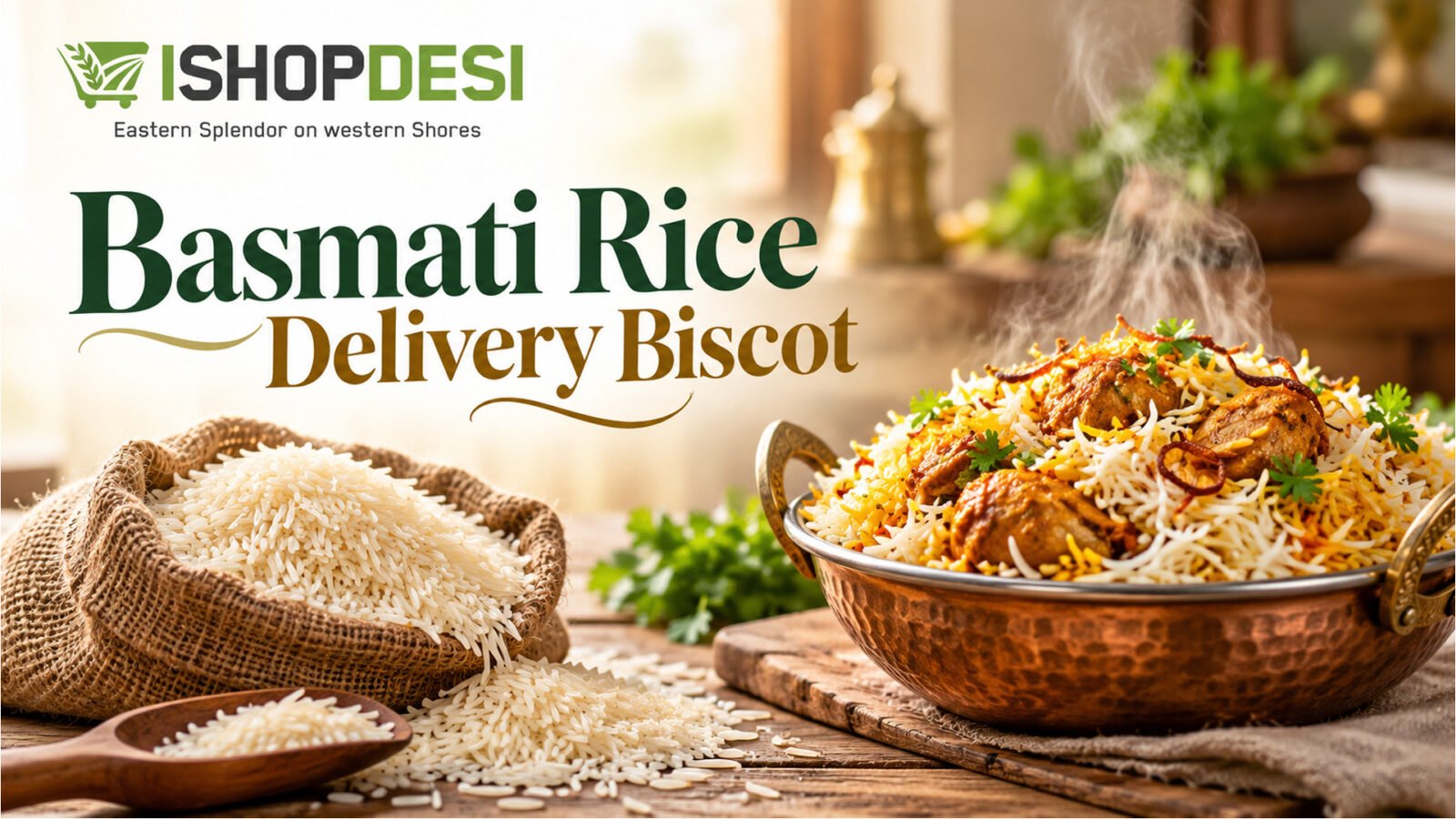
You lift the lid after twenty minutes of dum cooking, expecting long, beautifully separated grains of biryani.
Instead, the rice has clumped together. A few grains are broken, the bottom feels wet, and the top has cooked differently from the centre.
The spices smell wonderful. The chicken is tender. Even the fried onions have turned out perfectly.
So, what happened to the rice?
Biryani is one of those dishes where small decisions can have surprisingly visible consequences. The rice variety, soaking time, water temperature, parboiling stage and final steaming method all influence the finished texture.
A successful biryani needs more than good basmati. It requires understanding how the rice changes during each stage of cooking.
For households exploring basmati rice delivery Biscot, choosing a suitable rice variety is an important first step. Knowing how to handle it is what helps produce the light, fragrant grains that make a well-prepared biryani so enjoyable.
This guide examines the mistakes behind sticky, broken or unevenly cooked rice and explains how to improve each stage without turning biryani preparation into guesswork.
What Makes Biryani Rice Different from Everyday Boiled Rice?
When preparing ordinary boiled rice, the aim is often to cook the grains until they are tender and ready to serve.
Biryani introduces another stage.
In many layered biryani recipes, rice is partially cooked before being arranged with a prepared meat or vegetable mixture. It then finishes cooking during the dum stage.
That means the grains need to survive boiling, draining, layering and steaming.
If they become fully soft during the first stage, they may overcook later.
If they remain excessively firm, the final dum process may not provide enough moisture or time to finish them evenly.
The challenge is to manage both stages as one cooking process.
Fluffy Rice Is About Separation, Not Just Length
Long basmati grains are attractive, especially when they remain distinct after cooking.
However, grain length alone doesn’t guarantee a successful biryani.
Moisture absorption, starch release, handling and cooking time all affect separation.
A shorter grain that is cooked appropriately may produce a better result than an extra-long variety that has been overcooked.
The Rice Must Match the Recipe
Different biryani methods have different requirements.
A layered pakki biryani, where the main ingredients are cooked before dum, may require a different approach from a kacchi-style preparation.
The amount of moisture present in the masala also matters.
Choose a recipe that specifies the rice preparation method clearly rather than assuming all biryani techniques are identical.
Which Basmati Rice Is Best for Biryani?
Rice packaging can be confusing.
You may see descriptions such as aged basmati, extra-long basmati, steamed rice or sella rice.
These terms describe different characteristics or processing methods, but they don’t automatically tell you which product will work best in your kitchen.
For readers comparing basmati rice online in Luton, the most useful information is how the variety behaves during cooking.
Traditional White Basmati
White basmati is widely used in biryani and pulao recipes.
Depending on the variety and processing, it can produce long, aromatic grains.
However, soaking and cooking requirements vary between products.
A method that works for one brand may need adjustment when another variety is introduced.
Aged Basmati Rice
Some basmati products are aged before packaging.
Ageing can influence moisture characteristics and cooking behaviour, although results depend on the particular rice and its processing.
It is not a guarantee that every aged product will outperform every non-aged variety.
The best approach is to follow the product guidance and evaluate the result in your preferred recipe.
Sella Basmati Rice
Sella rice is parboiled during processing before the rice is milled.
It can have different cooking characteristics from ordinary white basmati and is used in several biryani styles.
Some cooks prefer its ability to retain a firmer structure.
However, it may require different soaking or cooking times.
Do not apply the same method to sella and ordinary white basmati without checking the instructions.
Extra-Long Grain Basmati
Extra-long varieties are often chosen for their presentation.
They can look especially appealing in layered rice dishes when prepared correctly.
But the grain’s appearance should not replace careful attention to water absorption and cooking.
The best rice for biryani is the one that suits your recipe and produces the texture you prefer consistently.
Washing Basmati Rice: What Does It Actually Accomplish?
Washing is one of the first stages in many biryani recipes.
Yet it is also one of the most easily rushed.
Rice can carry loose surface starch, which may contribute to grains sticking together during cooking.
Rinsing helps remove some of this loose starch.
How to Wash Rice Gently
Place the rice in a suitable bowl or sieve and rinse it with clean water.
If using a bowl, move the grains gently rather than rubbing them aggressively.
Drain and repeat according to your recipe and the product’s instructions.
Some varieties release more visible starch during rinsing than others.
Avoid treating the rice roughly, as unnecessary handling can damage fragile grains.
Does the Water Need to Become Completely Clear?
Not necessarily.
The aim is to remove excess loose starch, not to perform an endless washing process.
Follow the guidance appropriate to the rice variety.
Overhandling can create unnecessary breakage.
Why Broken Grains Matter
Broken rice pieces tend to cook differently from intact grains.
They may release starch more readily and contribute to a softer texture.
Gentle washing, stirring and draining can help protect the grain structure.
The Soaking Stage: Why Timing Matters
Soaking allows rice to absorb some water before cooking.
This can influence how evenly the grains cook and how they respond to boiling.
However, soaking requirements vary.
Some white basmati recipes suggest around 20–30 minutes, while other products and preparations recommend different periods.
Sella rice may require another approach.
Always consider the rice type and recipe.
What Happens When Rice Isn’t Soaked Properly?
If a recipe expects soaked rice but you skip that step, the grains may cook differently from the intended method.
They may require additional time to soften.
The result can become inconsistent if the cooking time is not adjusted.
Can Basmati Rice Be Soaked for Too Long?
Excessive soaking can make some varieties more fragile.
The grains may become more susceptible to damage during draining and boiling.
The effect depends on the product and the conditions.
Longer soaking is not automatically better.
Drain Before Boiling
Once the recommended soaking period is complete, drain the rice appropriately.
Handle the grains gently.
This helps keep the next cooking stage more predictable.
Parboiling: The Stage That Determines the Final Texture
Parboiling is one of the most important steps in many layered biryani methods.
Here, the goal is to cook the rice only part of the way before combining it with the prepared masala.
The rice finishes cooking later.
This is where many biryani attempts go wrong.
Why Fully Cooked Rice Can Become Mushy During Dum
Imagine boiling the grains until they are completely tender.
Now imagine layering them with a moist curry and exposing them to further heat and steam.
The rice may absorb additional moisture and continue softening.
By the time the biryani is served, the grains could be excessively soft or broken.
Practical solution: Follow a recipe that specifies the appropriate level of partial cooking for your rice and dum method.
What Does Partially Cooked Rice Feel Like?
The grains should have begun cooking but still retain some firmness.
The exact texture varies depending on the biryani method.
Some recipes describe rice as approximately 70% cooked, but percentages are only rough cooking descriptions, not precise measurements.
A more useful approach is to follow the recipe’s visual and texture cues.
Don’t Depend on the Clock Alone
Cooking time is affected by:
- Rice variety and processing
- Soaking duration
- Grain thickness
- Water temperature
- Pot size and water quantity
- The strength of the heat
A fixed number of minutes cannot guarantee identical results across different kitchens.
Check the rice as it cooks.
Draining Rice Without Breaking the Grains
Beautifully separated grains can still be damaged during draining.
Rice that has partially softened is more delicate than dry rice.
Aggressive stirring or pouring can cause unnecessary breakage.
Use Suitable Equipment
A large, appropriate sieve or colander can make draining easier.
Choose equipment with openings small enough to retain the grains.
Handle hot water carefully to avoid burns.
Avoid Leaving Rice Sitting in Hot Water
If the recipe calls for draining at a particular stage, complete the process promptly.
Rice left in very hot cooking water can continue softening.
Give Excess Water Time to Drain
Excess surface water may introduce additional moisture during layering.
Allow the rice to drain appropriately without pressing or repeatedly stirring it.
This helps control the amount of liquid entering the final dish.
Layering Biryani: Balance the Rice and Masala
Biryani is not simply rice mixed into curry.
In layered preparations, the sequence and distribution of ingredients influence the finished result.
The masala contributes flavour and moisture, while the rice needs space to finish cooking properly.
For a broader look at traditional preparation, IShopDesi’s guide to cooking biryani with authentic ingredients covers rice, spices, herbs and meat choices.
The Masala Shouldn’t Be Excessively Watery
A very thin curry may release too much moisture into the rice during dum.
This can contribute to a heavy or soggy texture.
However, a mixture that is too dry may not provide enough moisture for the rice to finish cooking.
The required consistency depends on the recipe.
Spread the Layers Carefully
Distribute rice and masala as directed.
Avoid pressing the grains down heavily.
The aim is to allow the components to cook together without unnecessarily crushing the rice.
Aromatic Ingredients Need Balance
Fried onions, fresh coriander, mint, saffron preparations and whole spices may appear in different biryani recipes.
They provide aroma and flavour, but excessive quantities can dominate the dish.
When preparing a familiar biryani, use the seasoning ratios intended for that recipe.
IShopDesi’s article on Indian spices online Luton provides further information about commonly used whole and ground spices.
Dum Cooking: Where the Biryani Comes Together
The final steaming stage is where the partially cooked rice and prepared masala finish cooking together.
In traditional dum methods, heat and steam are managed carefully to develop flavour and texture.
But this stage is not simply about sealing a pot and leaving it unattended.
The heat level, moisture and duration all matter.
Why Excessive Heat Is a Problem
Very high heat can scorch the bottom before the upper layers cook evenly.
A thick-based pot and a suitable low-heat method may help, depending on the recipe.
Some cooks use a heat diffuser to moderate direct heat.
Follow a tested method appropriate for your cookware.
Why Too Much Moisture Is a Problem
An excessively wet masala can lead to clumping and a heavy texture.
Remember that the rice has already absorbed water during soaking and boiling.
The final stage should provide the moisture needed to finish cooking without overwhelming the grains.
Why Opening the Lid Repeatedly Can Affect Cooking
Steam contributes to the dum process.
Repeatedly lifting the lid can change the cooking environment.
Check the rice according to the recipe rather than opening the pot constantly.
Resting After Dum
Some biryani recipes include a short resting period after the heat is switched off.
This can help the cooking process settle before serving.
Follow the recipe and observe appropriate food-safety practices.
Why Your Biryani Rice Turns Sticky: Seven Common Causes
If the finished grains aren’t separating as expected, the problem may have begun much earlier than the dum stage.
| Problem | Possible cause | What to improve |
|---|---|---|
| Sticky grains | Excess loose starch or overcooking | Wash appropriately and control cooking |
| Mushy rice | Over-parboiling or too much moisture | Reduce initial cooking and check masala consistency |
| Broken grains | Rough washing, draining or stirring | Handle rice more gently |
| Hard grains | Insufficient cooking or moisture | Follow appropriate parboiling and dum guidance |
| Burnt bottom | Excessively high heat | Use suitable cookware and control the heat |
| Uneven texture | Inconsistent grain preparation or layering | Check soaking, draining and heat distribution |
| Heavy, wet biryani | Excess liquid in the masala | Balance moisture before layering |
These are common possibilities rather than universal diagnoses.
The most useful approach is to identify the stage at which the problem begins.
Mistake One: Treating All Basmati Varieties the Same
Different rice products may have different cooking characteristics.
Better approach: Check the product instructions whenever changing varieties.
Mistake Two: Soaking Without Considering the Recipe
An excessively long or insufficient soaking period can affect the result.
Better approach: Use the duration suited to the rice and preparation method.
Mistake Three: Fully Cooking Rice Before Layering
The dum stage may overcook already tender grains.
Better approach: Follow the partial-cooking guidance in your biryani recipe.
Mistake Four: Mixing the Layers Aggressively
Repeated stirring can damage delicate cooked grains.
Better approach: Layer carefully and use a gentle serving technique.
Mistake Five: Adding Too Much Water to the Masala
Excess moisture can make the finished dish soggy.
Better approach: Control the gravy consistency before assembling the biryani.
Mistake Six: Increasing the Heat to Finish Faster
High heat may burn the lower layers.
Better approach: Follow the specified dum method and use suitable cookware.
Mistake Seven: Serving Before the Rice Has Finished Cooking
Some grains may remain too firm.
Better approach: Check the finished texture according to the recipe and allow appropriate resting time where recommended.
Chicken Biryani: Why the Meat Preparation Affects the Rice
Rice is the main focus of this guide, but the accompanying ingredients also influence the final texture.
A chicken masala that releases excessive liquid during dum may affect the rice.
Similarly, a preparation that is too dry can change how the grains finish cooking.
Bone-In and Boneless Chicken Behave Differently
Many biryani recipes use bone-in chicken, while others are designed for boneless pieces.
Their cooking requirements can differ.
A boneless version should not automatically be prepared using identical timings to a bone-in recipe.
For more information on choosing chicken products, IShopDesi’s guide to halal whole chicken delivery Luton explores appropriate cuts for traditional meals.
Don’t Use Rice to Correct an Unbalanced Curry
If the masala contains too much liquid, adding extra rice at the last moment is not necessarily a reliable solution.
The new rice may require different cooking conditions.
Correct the preparation according to a suitable recipe before layering.
Keep Food Safety in Mind
Chicken must be cooked thoroughly.
When combining meat and rice, use a tested recipe that ensures all components are safely cooked.
Check temperatures where appropriate and follow current UK food-safety guidance.
A Practical Biryani Rice Checklist Before Cooking
A little preparation can prevent many of the mistakes that lead to sticky or broken grains.
Before beginning, consider these questions.
Is the Rice Suitable for the Recipe?
Check whether you’re using ordinary white basmati, sella or another variety.
Have You Read the Soaking Instructions?
Different products may require different preparation.
Is the Pot Large Enough?
Rice needs suitable space and water for the boiling method being used.
Is the Masala Ready?
The meat or vegetable mixture should reach the stage specified by the recipe before layering.
Is Your Dum Cooking Method Clear?
Know the required heat, timing and cookware before assembling the dish.
This prevents confusion once the rice has been partially cooked.
How to Choose Basmati Rice Online in Biscot, Luton
For shoppers exploring buy basmati rice online Biscot, understanding the product description can help avoid purchasing a variety that requires a different cooking approach from the one expected.
The pack may specify traditional basmati, aged rice, sella or another type.
Read the details carefully.
Compare the Rice Variety
Choose a rice suited to the biryani style you intend to prepare.
Don’t rely exclusively on descriptions such as premium or extra-long.
Check Pack Weight
A larger bag may offer a different price per kilogram, but the quantity should fit your household’s consumption and storage space.
Rice needs appropriate dry storage.
Review Cooking Instructions
Preparation guidance may differ between products.
If changing brands or varieties, consider testing a smaller quantity before preparing biryani for a large gathering.
Check Current Delivery Information
Before ordering, confirm whether the retailer currently serves your Biscot postcode.
Product availability, delivery arrangements and applicable charges may change.
IShopDesi provides an online platform for exploring available South Asian groceries and rice products.
Readers can also explore its guide to buying basmati rice online in the UK for wider purchasing considerations.
For households managing regular rice purchases, the article on basmati rice delivery in Luton offers additional advice on keeping suitable quantities available.
The important thing is to select a rice variety you understand and can prepare consistently.
Frequently Asked Questions
Which basmati rice is best for fluffy biryani?
A suitable long-grain basmati variety can work well. White basmati, aged varieties and sella may require different preparation methods, so choose according to the recipe.
Why does my biryani rice become sticky?
Possible causes include excess loose starch, overcooking, broken grains or too much moisture during dum.
Should basmati rice be soaked before making biryani?
Many biryani recipes recommend soaking. The appropriate duration depends on the rice variety and recipe.
How long should biryani rice be boiled?
There is no universal time. Rice variety, soaking and cooking conditions affect the result. Follow the partial-cooking guidance in your chosen recipe.
Should biryani rice be fully cooked before dum?
In many layered biryani methods, rice is partially cooked before dum. Cooking it fully beforehand can lead to excessive softness.
Is sella rice suitable for biryani?
Yes. Sella basmati is used in various biryani preparations, but its cooking requirements can differ from ordinary white basmati.
Why does my biryani burn at the bottom?
Excessive heat, unsuitable cookware or insufficient moisture may contribute. Use a tested dum method and manage the heat carefully.
Can broken rice grains make biryani sticky?
Broken grains may release starch more readily and cook differently, potentially affecting the final texture.
How should uncooked basmati rice be stored?
Follow the packaging instructions. Keep rice in a suitable dry, protected storage environment and check it before use.
Can I order basmati rice online in Biscot, Luton?
You can explore online South Asian grocery retailers such as IShopDesi. Confirm current product availability and delivery eligibility for your Biscot postcode before purchasing.
Conclusion: Fluffy Biryani Rice Is Built in Stages
The most satisfying biryani rice doesn’t happen by accident.
Its texture develops through a series of decisions: choosing the right variety, washing gently, soaking appropriately, controlling the parboiling stage and managing moisture during dum.
Each stage influences the next.
Overcook the rice early, and the final steaming process may make it too soft. Add excessive moisture during layering, and the grains may lose their separation. Use too much heat, and the bottom can burn before the upper layers are ready.
For Biscot households, understanding these details makes it easier to choose suitable basmati and approach biryani cooking with greater confidence.
The aim is not simply to produce the longest grains.
It is to create rice that remains fragrant, properly cooked and pleasantly separate, allowing the spices and other ingredients to shine.
When the cooking method suits the rice, that first spoonful of biryani becomes far more rewarding.













Leave a comment