
Online grocery shopping is supposed to make life easier. But when halal is involved, “easy” isn’t the only goal—certainty is.
For many Muslim families in the UK, halal shopping isn’t just a preference. It’s a responsibility. And the reason people hesitate with online ordering is rarely about the technology. It’s about trust: who is fulfilling the order, how products are sourced, what happens when something is out of stock, and whether the items will actually match what the household needs.
This guide is built around one idea: halal grocery delivery UK should feel trustworthy first, convenient second. Especially during pre-launch phases—when a platform has the chance to prove it understands the community before scaling.
Why Trust Matters More Than Speed When Shopping Halal Online
Halal is a responsibility, not a label
In a halal household, the “halal” part isn’t a marketing badge. It’s a standard people live by. That standard includes how food is sourced, handled, and sold—not just what the packaging says. When you shop in person, you can rely on familiarity: a butcher you know, a shop you recognise, a routine you trust. Online removes that physical reassurance, so the platform has to replace it with clarity.
That’s why the most valuable thing a service can offer isn’t speed—it’s confidence.
What UK Muslim families actually worry about when ordering online
These are the real questions families quietly carry:
- Is this coming from a known local shop or a generic warehouse?
- Are descriptions specific or vague?
- Will substitutions be random and ruin the plan?
- Is the service consistent, or is every order a surprise?
People don’t want drama with food. They want the same calm feeling they get from shopping locally—just without the extra travel.
What Trust-First Halal Grocery Delivery Looks Like in Real Life
Clear sourcing and shop accountability
Trust grows when it’s obvious who is behind the basket. A trust-first model makes it easy to see the source: local shops, local butchers, real businesses with a reputation to protect. That’s why community-first platforms resonate—because accountability is built in.
If you want a simple explanation of how a local-first model works, start here: what ISHOPDESI is.
Consistent handling and reliable fulfilment
Trust isn’t built on one good delivery. It’s built on repeatability: orders arriving as expected, packaging that makes sense, and fulfilment that feels professional rather than rushed.
A trust-first service is predictable in the best way. It doesn’t leave you wondering, “What will I get this time?”
Familiar products that match desi kitchens
Many Muslim households in the UK are also South Asian households—Pakistani, Indian, Bangladeshi. That means grocery shopping isn’t just milk, bread, and cereal. It includes staples that mainstream platforms often misunderstand or underserve.
That’s why desi grocery delivery UK has grown so quickly: families want familiar brands and real kitchen essentials—not a limited “ethnic” corner. This shift is explained well in desi grocery delivery UK.
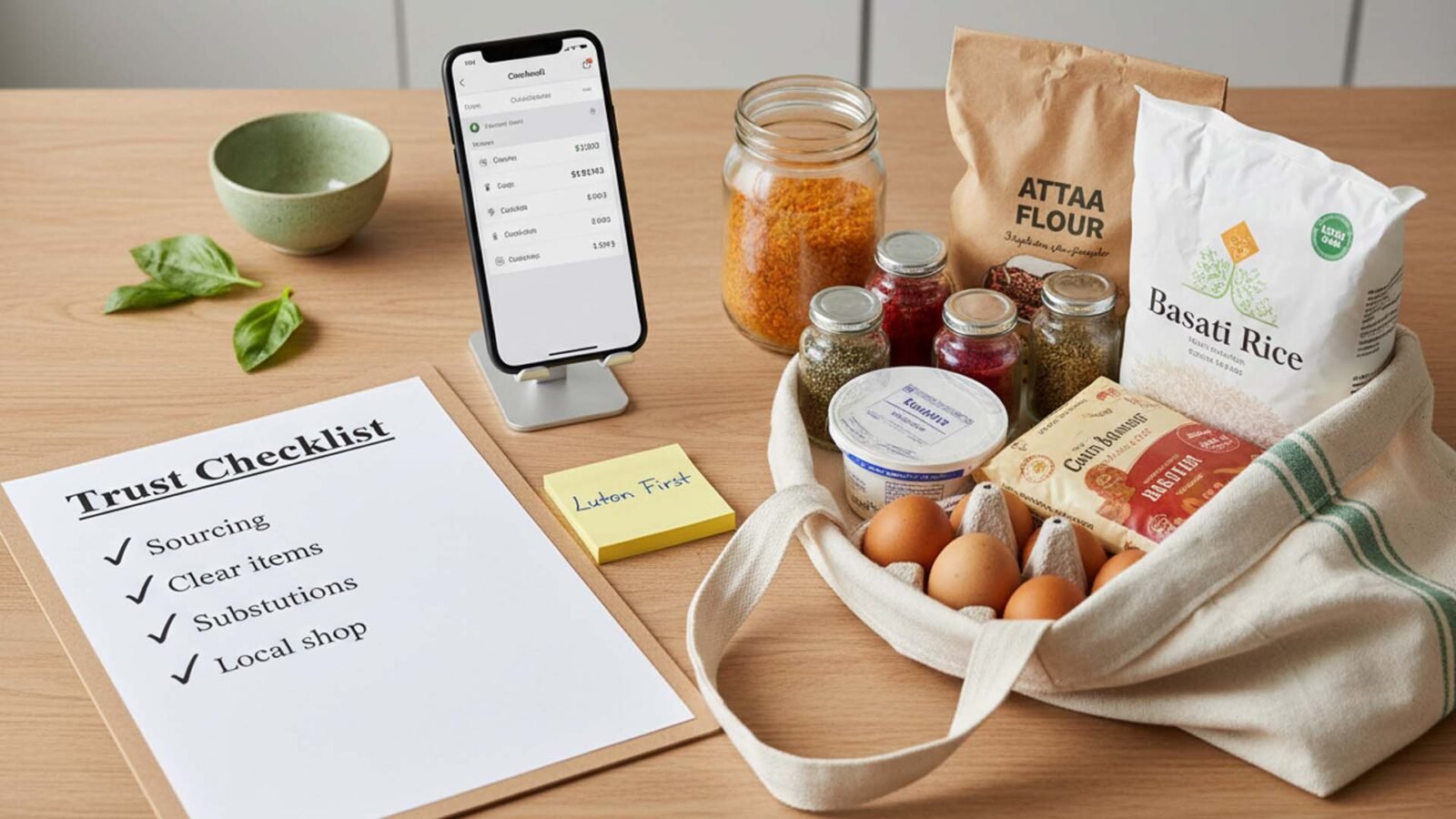
The Trust Checklist Before You Place an Order
Questions to ask without sounding awkward
You don’t need to interrogate anyone. You just need clarity. Before ordering, check for:
- Is the shop or seller identifiable?
- Are items described with meaningful detail (pack sizes, weights, variants)?
- Are substitution rules clear and sensible?
- Is pricing straightforward and stable?
A trustworthy service doesn’t hide behind vague listings.
What good transparency looks like
Transparency is simple:
- clear product naming
- realistic photos or consistent descriptions
- clear notes on what’s included
- clear delivery expectations
- clear communication if something changes
When everything is clear, you don’t feel like you’re “taking a risk.” You feel like you’re placing an order.
Red flags that should make you walk away
- vague listings that don’t specify pack size or type
- “Trust us” language without details
- unclear substitution policies
- heavy pressure tactics (“limited time,” “only today,” “hurry”)
- prices that feel too good with no explanation
Trustful sellers don’t rush you. They inform you.
What to Order First for a Smooth Start
When you’re ordering from a platform for the first time, don’t start complicated. Start with the items that protect your week.
Daily essentials that keep routines steady
These are the items that quietly run out and cause the most disruption:
- milk, yogurt, eggs
- fruit you actually eat (bananas, apples, oranges)
- bread/roti essentials
- cooking basics (onions, tomatoes, ginger/garlic)
- a few consistent snacks for busy evenings
If you want a broader baseline list you can reuse and adapt, this Ramadan grocery list UK is a strong master checklist even outside Ramadan because it’s built around real household staples.
Pantry anchors desi homes rely on
A desi pantry is the difference between “we can cook anything” and “we have nothing to cook.”
Core anchors include:
- atta and basmati rice
- daal and chana
- masalas and whole spices
- cooking oil/ghee
- tea, long-life milk options, and basic condiments
The emergency freezer tray that saves busy evenings
This is the practical trick that makes online grocery delivery feel like a real support system:
- frozen parathas
- samosas/rolls
- kebabs/nuggets (especially for kids)
- frozen veg mix for quick meals
A freezer tray isn’t laziness. It’s how busy households stay consistent.
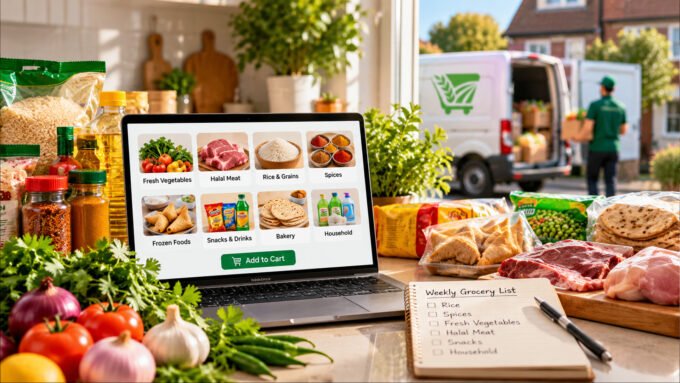
Halal Meat and Grocery Shopping Without Stress
How to plan weekly without overbuying
The easiest weekly plan is a simple rotation:
- one chicken option
- one mince option
- one curry cut or grilling option
This removes decision fatigue and stops the “random buying” that leads to waste.
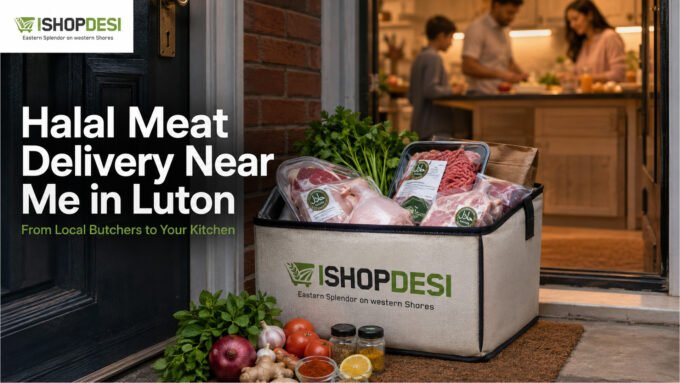
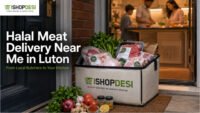
If you’re in Luton and halal meat is the hardest part of the routine, this local guide is directly useful: halal meat delivery in Luton.
Fresh vs frozen what actually works
A good rule:
- keep fresh what you’ll cook in the next 2–3 days
- freeze portions for later
- portion before freezing so defrosting is easy
Frozen doesn’t mean low quality. It means controlled planning. Fresh is great—but only when it matches your schedule.
Why Local Shops Make Online Ordering Feel Safer
Local trust transfers naturally to online ordering
When people already trust a shop in their area, ordering online feels like an extension of an existing relationship—not a leap of faith. That’s why local-first models work so well in community-driven cities.
If you’re in Luton, these two guides explain that local trust factor clearly:
Shorter routes help freshness and consistency
Shorter delivery distances make freshness easier to protect and mistakes easier to fix. It’s one of the most underrated reasons local-first fulfilment often feels “safer” than nationwide warehouse delivery.
Luton First Building Trust Before Scaling
Why solving one city properly matters
Pre-launch isn’t just a phase. It’s where trust is tested. A community-first platform should prove:
- product relevance is real
- fulfilment is consistent
- support is responsive
- trust standards are stable
Doing that in one city first builds the foundation for expanding without losing quality.
What a community-first rollout looks like during pre-launch
It means listening before scaling. It means building around actual shopping behaviour—not forcing the community to adapt to a generic system. Starting with Luton makes sense because local trust networks are strong and the need is clear.
A Simple Weekly Routine You Can Copy
Small households (2–3)
- weekly essentials: milk, yogurt, eggs, fruit
- pantry: atta, rice, one daal, masalas
- freezer tray: parathas + one snack item
- meat rotation: chicken + mince
Medium households (4–6)
- bigger dairy and fruit top-ups
- pantry staples in larger packs
- freezer tray: parathas + snacks + kebabs
- meat rotation: chicken + mince + one curry cut
Large or multi-generational households (7+)
- bulk staples: atta, rice, multiple daals/chana
- regular fruit + cooking basics
- multiple freezer trays
- meat rotation: larger chicken plan + mince bulk + curry cuts
Consistency is the real win. Once your basket becomes predictable, shopping feels calm again.
Final Thoughts Shop Halal Online With Confidence
Trust is built through clarity not claims
A platform doesn’t earn trust by saying “we’re trusted.” It earns trust by showing you the details, staying consistent, and treating halal standards like a responsibility—not a marketing line.
Soft pre-launch closing line with early access vibe
IShopDesi is building a trust-first model starting with Luton—focused on familiar products, local accountability, and a smoother way to meet halal household needs. If you want to be part of the early rollout, keep an eye on the pre-launch updates and be ready to join when early access opens.





Leave a comment