
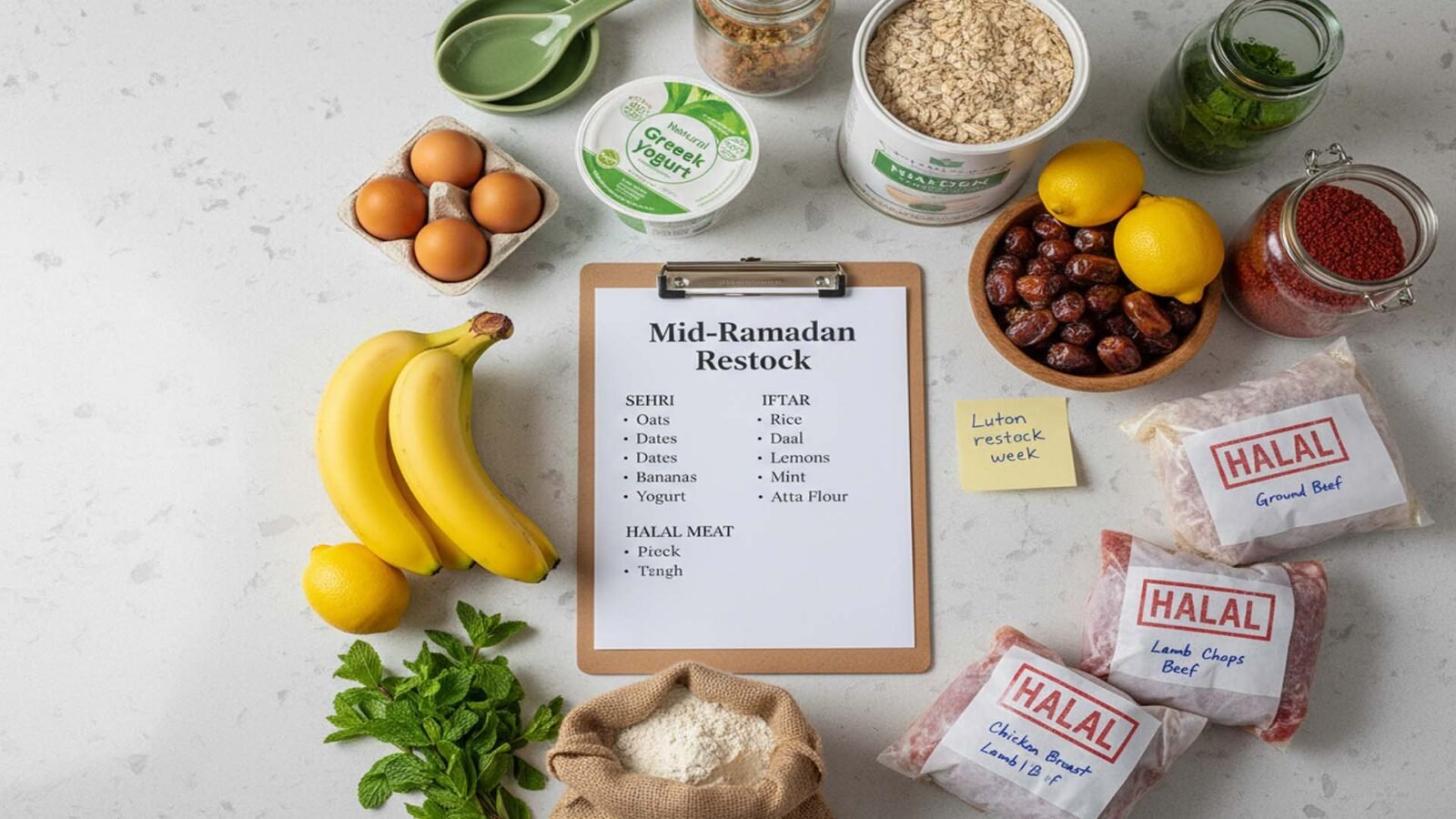
Mid-Ramadan has a very specific feeling.
The first week energy has settled, your routine is “kind of” working, and then suddenly—one evening—you realise you’re out of the things you thought you had plenty of. The yogurt is finished. The lemons are gone. The freezer snacks disappeared. And the one cut of meat you rely on weekly is either sold out or requires a long trip at the worst possible time.
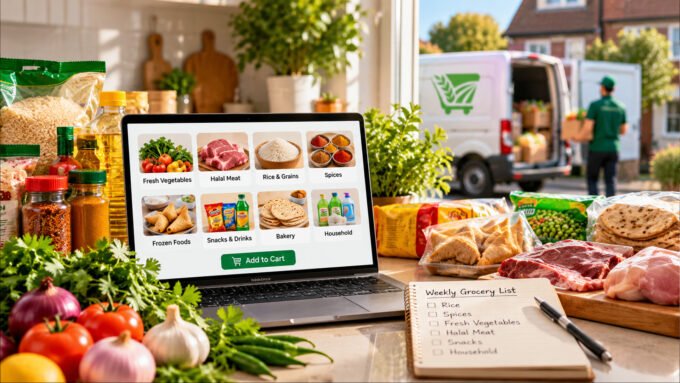
This guide is for Muslim families in the UK who want the second half of Ramadan to feel calmer—not chaotic. The real aim here isn’t just convenience. It’s bigger than that: fulfilling halal meat and halal food needs with trust—so your household can eat with confidence, without rushing, guessing, or compromising.
And because IShopDesi is in pre-launch, this matters even more. The goal is to solve a real problem that shows up sharply during Ramadan—starting with Luton—where demand is strong and time windows are tight.
Mid-Ramadan Reality: Why “We’re Fine” Turns Into a Last-Minute Rush
Mid-month is when the hidden pressure shows up:
- you’re more tired, so shopping feels heavier
- work and school routines don’t slow down
- weekends get busier with family visits and gatherings
- you cook more frequently than a normal month
The biggest issue isn’t that families don’t plan. It’s that Ramadan creates “small drains” every day—and suddenly the kitchen runs out of the basics.
The Real Goal: Halal Needs Met with Trust (Not Just “Fast Delivery”)
Most Muslim families aren’t looking for shortcuts. They’re looking for certainty:
- meat from a trusted halal source
- clear handling and honest fulfilment
- familiar products from shops they recognise
- consistency week after week
That’s why terms like halal meat delivery UK and order halal meat online UK matter: people don’t search those phrases because they want a random marketplace. They search because they want halal access to feel reliable—especially when they’re rushed.
The Mid-Ramadan Restock Method: Restock in Layers, Not Chaos
Instead of doing one big stressful shop, restock in three layers. It keeps you grounded and prevents overspending.
Layer 1: Daily drivers (Sehri + Iftar basics)
These run out quietly and cause the most disruption.
Layer 2: Weekly anchors (Meat + core staples)
These decide what your actual meals will be.
Layer 3: Emergency tray (Freezer wins)
This saves you on busy nights when nothing goes to plan.
If you want a full month structure, keep your Ramadan grocery list UK handy and use this guide as the mid-month “top-up” strategy.
What Desi Homes Run Out of First (The Real Mid-Ramadan List)
Sehri staples that finish faster than expected
- yogurt / dahi
- eggs
- oats
- bananas and apples
- dates
- milk
If you need quick rotation ideas so sehri stays consistent, these 15-minute sehri recipes are built for busy mornings.
Iftar basics that disappear mid-month
- lemons
- mint and coriander
- fruit for opening fast
- yogurt (again—because it’s used everywhere)
- simple drinks and hydration essentials
If thirst and fatigue are creeping in during the day, a steady routine helps more than a “one-time fix.” This guide is a good reference:hydration in Ramadan
Pantry items you assume are “still there”
- atta
- basmati rice
- daal and chana
- cooking oil / ghee
- ginger/garlic
- core masalas
The surprise shortage
- frozen parathas
- frozen samosas/rolls
- kebabs/nuggets for kids
- quick veg mixes
These aren’t “junk.” They’re the safety net that prevents last-minute takeaway and makes the house feel under control.
Halal Meat Restock: What to Buy for the Next 7 Days
This is the part that makes or breaks the week. A good plan isn’t about buying more—it’s about buying the right cuts so your meals don’t become stressful.
Think of your week in three buckets:
1) Chicken for speed (weeknight reliability)
Chicken is the workhorse of Ramadan meals. For most families, this is the easiest base to keep consistent.
Good weekly choices:
- chicken pieces for curries
- boneless cubes for quick wraps and skewers
- a smaller portion of breast if you prefer lighter meals
This supports what most families really want: fresh halal meat UK that cooks quickly and still tastes right.
2) Mince for flexibility (the “save the day” option)
Mince becomes:
- keema
- patties/cutlets
- quick curry
- wraps
- stuffed parathas
If you like practical weeknight cooking, mince is the easiest item to portion and freeze.
3) One red meat option for depth (weekend comfort)
Pick one, not three:
- lamb for faster cooking
- mutton for traditional slow-cook flavour
- beef for batch cooking and curries
You don’t need red meat every day. You need one solid option that gives variety and feels like a proper weekend meal.
What to Freeze vs What to Keep Fresh (So Nothing Gets Wasted)
A mid-Ramadan mistake is buying too much fresh meat “because it will be used,” then the week gets busy and it doesn’t happen.
A smarter approach:
- keep fresh: 2–3 day cooking supply
- freeze: mince, curry cuts, kebab portions, extra chicken
- portion before freezing: meal-sized packs reduce waste
This is the logic behind why many households prefer a weekly halal meat box delivery UK style restock—less chaos, more structure.
Trust Checklist: How to Restock Halal Meat Without Guesswork
When people are rushed, they accept vague answers. Mid-Ramadan is when it’s worth slowing down for 30 seconds and checking the basics.
Ask simple questions:
- Is the halal sourcing clearly stated?
- Is the shop/butcher identifiable and locally accountable?
- Are cuts and weights specific, not generic?
- Is the condition and freshness described clearly?
If the answers feel vague or overly salesy, that’s a sign to step back. Trust isn’t built through pressure.
Smart Mid-Ramadan Shortcuts That Don’t Feel Like Cheating
This is how households stay consistent without burning out.
The 30-minute reset (one evening)
- boil eggs for 2–3 days
- portion and freeze mince into flat packs
- marinate a chicken portion for quick grills
- wash and store cucumber, mint, lemons
- portion daal into 2 meal containers
The two-meal rule
Whenever you cook, aim for:
- one meal for tonight
- one meal for tomorrow
This single habit makes the second half of Ramadan dramatically easier.
Keep an emergency tray ready
Freeze a “busy-night tray”:
- samosas/rolls
- kebabs
- parathas
So even a chaotic day still ends with a decent iftar.
Why Luton Needs a Local-First Restock Solution (Especially in Ramadan)
Luton is perfectly positioned for a community-first halal model because the demand is consistent and the trust networks are strong—but Ramadan increases pressure.
Local-first matters because:
- shorter distances protect freshness and handling
- familiar shops keep trust intact
- delivery is more predictable when it stays neighbourhood-based
This is why content around halal grocery delivery in Luton and local fulfilment is so important during pre-launch: the problem is real, and the solution should match how the community already shops.
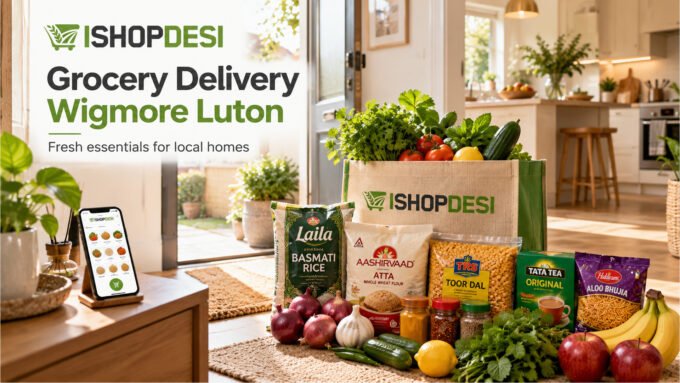
halal grocery delivery in Luton
desi grocery delivery in Luton
And if your biggest weekly stress is meat restocking, this local guide is directly relevant:
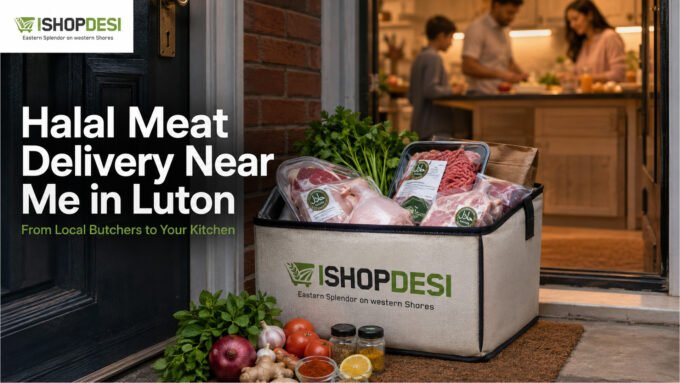
halal meat delivery in Luton
If you’re new to the platform concept and want the bigger picture of how it works, here’s what to read:
what ISHOPDESI is
Copy-Paste Mid-Ramadan Restock Lists (Choose Your Household)
Small household (2–3 people)
Sehri: eggs, yogurt, oats, bananas, dates
Iftar: lemons, mint, fruit, yogurt
Pantry: atta, rice, daal, oil, masalas
Meat: chicken + mince + one red meat option
Freezer: parathas + one snack item
Medium household (4–6 people)
Sehri: bigger yogurt, eggs, oats, fruit, dates
Iftar: fruit, lemons, mint, hydration essentials
Pantry: atta, rice, 2–3 daals, oil, ginger/garlic
Meat: chicken (more quantity) + mince + curry cut
Freezer: parathas + samosas/rolls + kebabs
Large / multi-generational households (7+)
Sehri: bulk yogurt, eggs, oats, fruit, dates
Iftar: fruit, lemons, mint, soup/starter basics
Pantry: bulk atta + bulk rice + multiple daals/chana
Meat: larger chicken plan + mince bulk + curry cuts
Freezer: multiple trays of snacks + parathas
Final Word: The Second Half of Ramadan Should Feel Easier
Mid-Ramadan restocking isn’t about buying more. It’s about protecting your routine—so your household can serve halal meals calmly, with trust, and without constant last-minute panic.
That’s the real mission behind a community-first model: not just delivery, but reliable halal access—starting where the need is clear, like Luton, and expanding the right way.
If you want, I can also create the SEO data + title image prompt for this article in the same style you’ve been using for your blog posts.









Leave a comment