
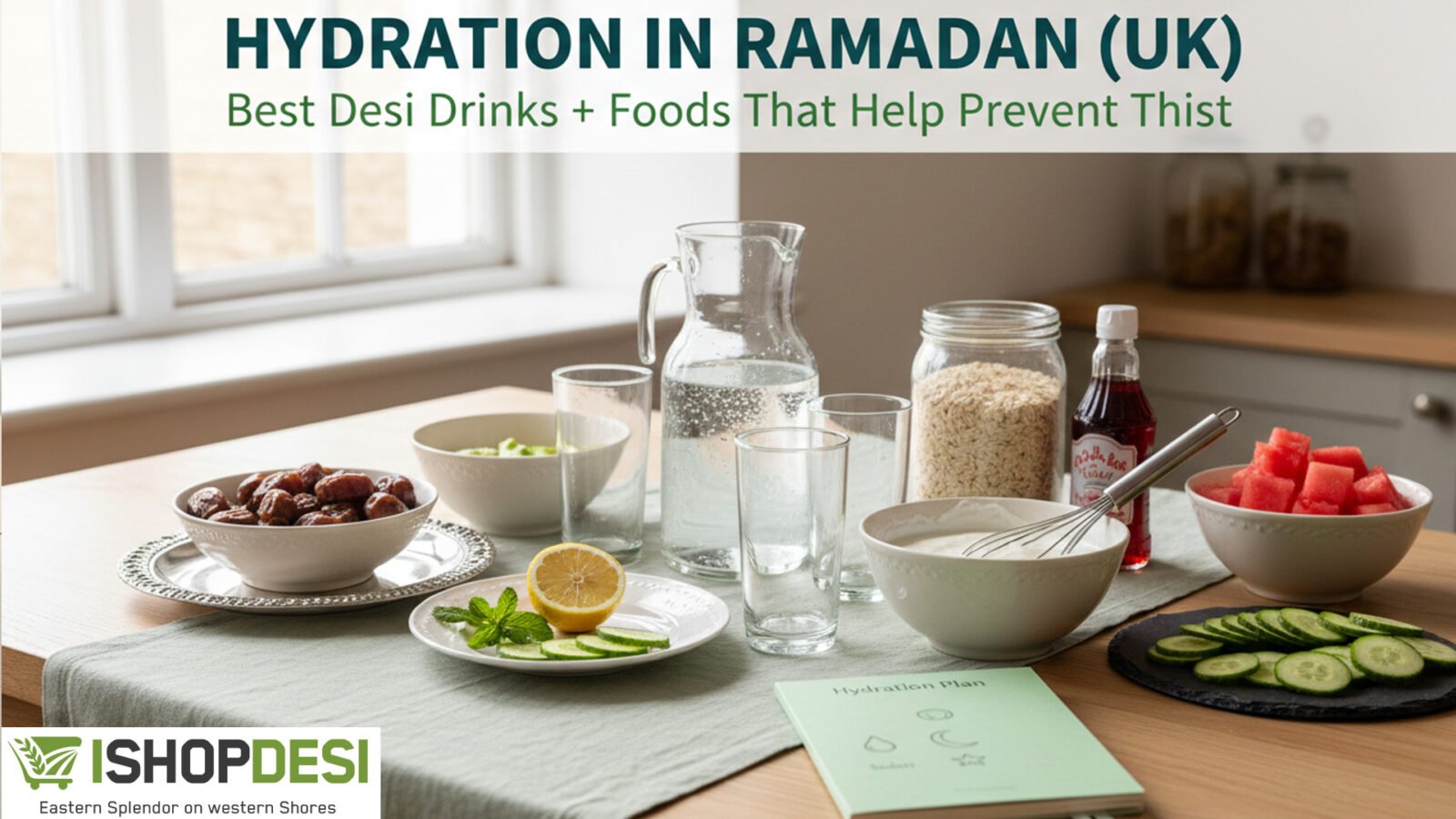
Ramadan in Britain has its own rhythm. Even when the weather feels mild, fasting can still leave people feeling unusually thirsty or drained—especially on long days packed with work, college, school runs, and commuting. The challenge usually isn’t one “magic drink.” It’s a pattern: how you break your fast, what you eat at sehri, and how fluids and salt/sugar are spread between iftar and sleep.
This guide is for Pakistani, Indian, and Bangladeshi households across the UK who want to stay hydrated without giving up familiar desi choices.
Why Hydration Can Feel Tough During Ramadan in Britain
Hydration becomes harder when a few lifestyle factors stack up:
- Long daylight hours in some Ramadan seasons
- Dry indoor heating that dehydrates without you noticing
- Late nights and early sehri that reduce recovery sleep
- Busy routines that make it easy to forget water after iftar
If you feel fine at night but struggle the next afternoon, it usually means the evening routine didn’t rebuild hydration properly.
What Actually Causes Thirst in Ramadan
Most thirst comes from habits that sneak into desi routines:
Too much salt
Pickles, salty chutneys, snack mixes, crisps, and heavily seasoned fried items can make thirst worse the next day.
Spicy + fried too often
Spice isn’t the problem by itself—spice plus fried food and salt, night after night, often triggers dryness and discomfort.
Sugary drinks in large amounts
Sweet drinks feel refreshing at iftar, but heavy sugar can leave you thirstier later and cause an energy spike followed by a crash.
Tea-only sehri
When sehri is tea plus something light, you start the day under-fueled and under-hydrated.
Water all at once
Drinking a lot in one go doesn’t “store” water. Spreading fluids works better.
Simple Hydration Rules That Work
No complicated tracking—just consistency.
Spread fluids from iftar to sehri
A practical rhythm:
- Water slowly at iftar
- Another glass after prayer/meal
- One or two glasses later in the evening
- One glass before sleep
- One to two glasses at sehri, sipped steadily
Pair water with hydrating foods
Yogurt, fruit, soups, and oats help hydration stick better than water alone.
Keep salt and sugar lighter most days
You can still enjoy traditional iftar—just not at maximum intensity every single night.
Desi Drinks That Help Hydration
These are familiar choices in desi kitchens, and they work best when balanced.
Lemon water (nimbu pani)
A simple daily win. Use water + lemon, and if you add salt, keep it to a tiny pinch. If you prefer sweetness, keep sugar minimal.
Salted lassi (namkeen lassi)
Great when you feel dry after salty or heavy iftar meals. Yogurt + water + a pinch of salt + roasted cumin creates a drink that feels cooling and supports digestion.
Sweet lassi (light)
Useful if plain water is hard to drink after a long day. Keep it light and avoid turning it into dessert. A banana can add natural sweetness without extra sugar.
Rooh Afza, made “smart”
Rooh Afza isn’t the issue—over-sweetening is. Use more water, less syrup, and treat it as a flavour drink, not your main hydration.
Basil seeds or chia (optional)
Many families use basil seeds or chia in water or milk. It can help you sip more comfortably. Keep added sugar low.
Coconut water (optional)
Easy to find in Britain and naturally refreshing after iftar. Not essential, but helpful for some people.
Hydrating Foods for Sehri That Reduce Thirst Later
Sehri sets the tone for the day. The best sehri foods are steady, not heavy.
Good sehri choices:
- Yogurt and raita
- Oats, including savoury masala oats
- Bananas and other fruit
- Cucumber
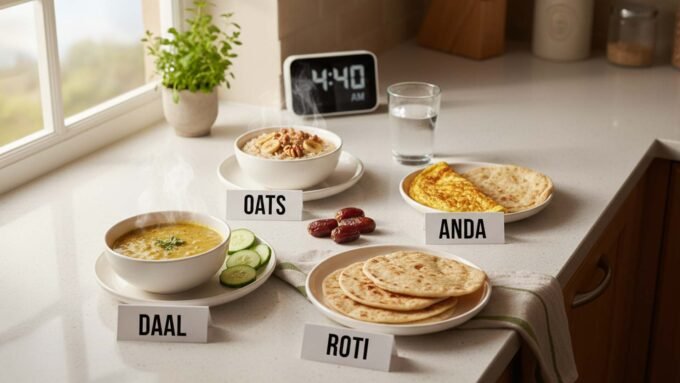
- Chana or daal for fibre + protein
- Roti with a light daal or egg
For fast, practical options that fit a busy routine, use these sehri recipes.
Hydrating Foods for Iftar That Don’t Backfire
How you start iftar affects thirst and digestion later.
A simple pattern:
- Water + dates
- Fruit or a light soup
- Main meal
Hydration-friendly iftar additions:
- Fruit bowl (watermelon, oranges, grapes)
- Yogurt chaat
- Light lentil soup
- Cucumber salad with lemon
What to Limit If You Get Very Thirsty
You don’t need to cut these out completely—just reduce frequency:
- Pickles and very salty chutneys
- Snack mixes, crisps, salty biscuits
- Fried food every night
- Fizzy drinks and energy drinks
- Too much tea late at night
A useful trick: don’t let tea be your first drink after iftar. Drink water first, then enjoy tea later.
Weekly Hydration Grocery Checklist
These items make hydration easier without overthinking it:
- Lemons
- Yogurt
- Bananas + seasonal fruit
- Cucumbers + mint
- Oats
- Dates
- Rooh Afza if your household uses it
- Coconut water (optional)
- Basil seeds/chia (optional)
- Roasted cumin
If you want to plan hydration alongside everything else you’ll be cooking this month, use this Ramadan grocery list UK as your base checklist.
Why Local Ordering Helps You Stay Consistent
Hydration improves when your kitchen stays stocked with the basics you actually use—yogurt, fruit, oats, lemons, and weekly essentials. That’s one reason desi grocery delivery UK has become part of Ramadan routines for many families, especially when time is tight.
In Luton, consistency is easier when people can order from familiar stores and trusted local networks. That’s where desi grocery delivery in Luton and halal grocery delivery in Luton naturally fit into Ramadan planning.
And because many households plan weekly proteins during Ramadan, having a reliable option for halal meat delivery in Luton helps families stick to their routine without last-minute store runs.
Final Thoughts: Hydration Is a System, Not One Drink
Most people don’t need a new product—they need a better rhythm:
- Spread fluids between iftar and sehri
- Build hydration into food choices (yogurt, fruit, oats, soups)
- Keep salt and sugar lighter most days
- Make sehri and the start of iftar calmer and more balanced
That’s what keeps energy steadier and thirst more manageable throughout the month.












Leave a comment