
Ramadan food has a special place in desi homes. It’s comfort, tradition, family time, and often the one part of the day everyone looks forward to. So when people hear “healthy Ramadan,” they sometimes imagine boring salads, tiny portions, and food that doesn’t feel like Ramadan at all.
That’s not what this is.
A healthy Ramadan plate is simply a smarter way to enjoy the foods you already love—without the heavy slump, excessive thirst, or late-night cravings that many families deal with during the month. You don’t need perfection. You just need a simple structure that keeps energy steady and digestion calm, while still tasting like home.
The Desi Ramadan Pattern That Makes People Feel Tired
A lot of desi households fall into the same cycle, especially on busy days:
- Sehri is rushed (or skipped), so the day feels long and low-energy
- Iftar starts with something fried and salty, followed by a heavy meal
- Water intake happens late, all at once
- Sleep gets shorter, and the next day starts weaker
None of this is “wrong”—it’s just what happens when routines get packed. The solution isn’t to stop enjoying iftar. It’s to build a plate that works with fasting instead of fighting it.
The Healthy Ramadan Plate Method (Simple Visual Formula)
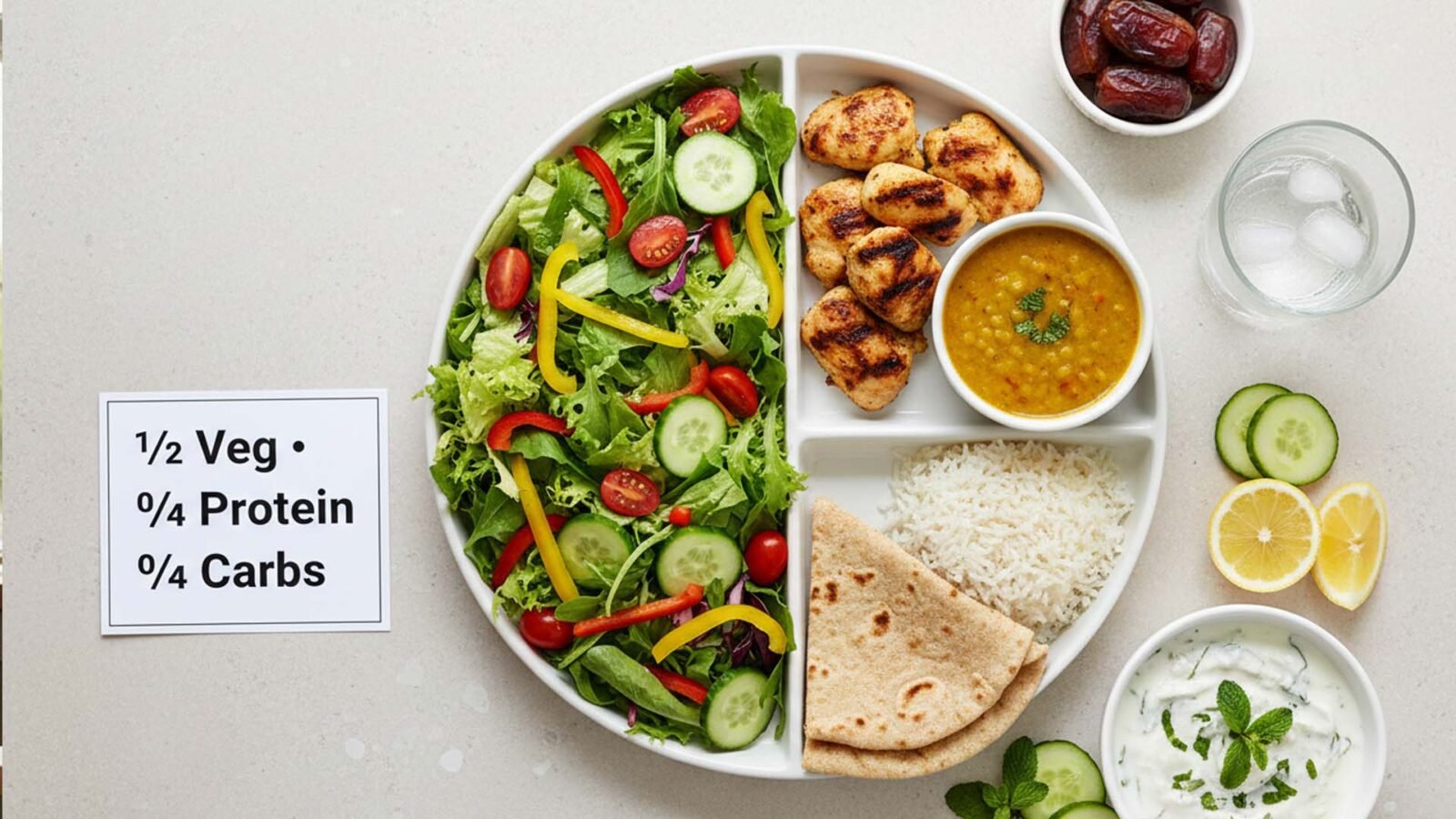
Think of your main meal (after breaking your fast) as a plate with three parts:
1) Half the plate: vegetables or light sides
This can be salad, cooked veg, soup, or even a light lentil dish with extra vegetables.
2) One quarter: protein
Chicken, fish, eggs, daal, chana, beans, yogurt—anything that helps you stay full and supports recovery.
3) One quarter: smart carbs
Roti, rice, oats, potatoes, or bread—kept to a sensible portion, not removed completely.
Plus two “quiet helpers”
- Hydration: steady water through the evening
- Fruit or yogurt: helps digestion and keeps cravings calmer
This method keeps taste on the table because it doesn’t ban desi food. It just stops the plate from being 80% carbs and fried snacks.
How to Break Your Fast Without Overeating
A healthier iftar isn’t about eating less; it’s about starting better.
A simple desi-friendly iftar flow
- Water + dates
- Pause for a few minutes (even a short pause helps)
- Light starter: fruit, soup, or yogurt-based bite
- Main plate using the balance method
The pause is the underrated trick. It gives your body time to catch up so you don’t eat two plates before you even realise you’re full.
If your kitchen planning is still in progress, having a solid Ramadan grocery list in the UK makes this routine much easier because you’ll actually have the right basics at home.
A Sehri Plate That Keeps You Full Longer
Sehri doesn’t need to be fancy. It needs to be steady.
What a balanced sehri looks like
- Protein: eggs, yogurt, chana, daal
- Slow carbs: oats, roti, wholegrain bread
- Hydration-friendly foods: fruit, yogurt, cucumber
- Less salt: because salty sehri almost always means a thirsty day
Simple sehri combinations that work
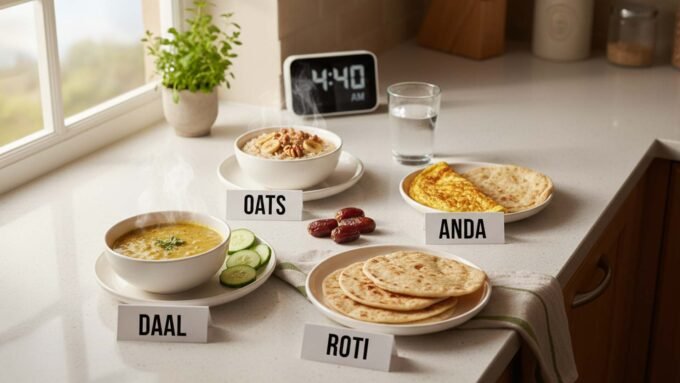
- Omelette + roti + yogurt
- Dahi chana bowl + dates + water
- Masala oats + boiled egg
- Light daal + roti + cucumber slices
If mornings are rushed, keep a list of quick sehri recipes you can rotate without thinking.
Healthy Iftar Plate Ideas That Still Feel Desi
Here are examples that taste like real desi food while keeping the plate balanced:
Option 1: Curry + salad + yogurt
- Chicken or daal curry (not overly oily)
- Fresh salad with lemon
- Yogurt/raita
- Small portion of roti or rice
Option 2: Grill-style iftar
- Chicken tikka or fish (grilled/air-fryer)
- Chutney + salad
- Small roti
- Fruit after
Option 3: Comfort bowl
- Daal with extra vegetables
- Cucumber raita
- One roti
- Dates + water
This is where people notice the difference: you still eat “proper food,” but you don’t feel heavy and thirsty for the next six hours.
Desi Proteins That Make Ramadan Easier
Protein is the “quiet hero” of Ramadan eating. It reduces the snack cravings, keeps energy steadier, and helps you feel satisfied.
Great protein choices for desi homes
- Chicken (especially thigh/leg pieces for taste)
- Fish (fast cooking, lighter on digestion)
- Eggs (quick and reliable)
- Daal and chana (budget-friendly, filling)
- Yogurt (especially at sehri)
- Keema (very practical for wraps, parathas, quick curries)
If your family relies on butcher cuts and you prefer local sourcing, using halal meat delivery in Luton can make weekly planning simpler—especially during Ramadan when time disappears quickly.
Smart Carbs for Desi Homes (Roti, Rice, Paratha—Without the Guilt)
Carbs are not the enemy in Ramadan. The problem is the portion and timing.
Simple portion rules
- Keep rice to a smaller serving if you already had fried snacks
- Choose roti more often than paratha on weekdays
- If paratha is a must, balance it with protein and yogurt
Desi carb swaps that don’t feel like punishment
- Whole wheat roti more often
- Oats at sehri a few days a week
- Add lentils/veg so carbs aren’t the whole meal
When the plate is balanced, you don’t need to “avoid” anything. You just stop stacking everything in one sitting.
Ramadan Snacks Without Feeling Restricted
Desi iftar snacks are part of the joy. The healthier approach is simply making snacks a “side,” not the whole meal.
Better snack strategy
- Choose one fried item, not five
- Add something hydrating alongside it: fruit, yogurt, salad
- Keep deep-fried nights as special nights, not every night
Snack ideas that still feel desi:
- Chana chaat with yogurt
- Fruit chaat
- Nuts and dates
- Light soup before the main meal
- Air-fryer samosas or kebabs (less oil, still satisfying)
Meal Timing That Works With Real Life
Many families feel best when the evening has a rhythm:
- Iftar: light start + balanced plate
- Later dinner (optional): smaller portion if hungry again
- Late snack: fruit/yogurt instead of heavy fried items
- Sehri: protein + slow carbs + hydration
This reduces the late-night “random snacking” that usually happens after a heavy iftar crash.
Grocery Checklist for a Healthy Ramadan Plate
A “healthy Ramadan plate” isn’t possible if the kitchen only has snacks. The goal is to keep the basics stocked so meals stay balanced naturally.
Keep these ready
- Yogurt, eggs, milk
- Oats
- Fruit (bananas + seasonal fruit)
- Cucumbers, lemons, mint
- Lentils/chana
- Chicken/fish or your preferred halal meats
- Spices and staples so you can cook quickly
- A controlled amount of frozen snacks for busy days
If you’re ordering essentials locally, the model behind desi grocery delivery in the UK is built around familiar products and community shopping routines—especially helpful during Ramadan.
And for households that prefer local store fulfilment and neighbourhood reliability, halal grocery delivery in Luton can be a strong fit for Ramadan restocks.
Common Mistakes That Make People Feel Worse (Even When They’re Eating)
A few patterns quietly cause fatigue:
- Starting iftar with heavy fried food every night
- Not eating enough protein at sehri
- Drinking most water only at the end of the night
- Too much salty food late in the evening
- Overdoing caffeine (especially late)
If your family fixes just two things—sehri protein and steady water after iftar—most people feel a noticeable difference within a few days.
Final Thoughts: Balance Is the Goal, Not Perfection
A healthy Ramadan plate doesn’t take away taste. It protects the month from becoming a cycle of heaviness and exhaustion.
Keep the food desi. Keep the joy. Just give your plate a structure:
- vegetables or light sides
- a solid protein
- a reasonable carb portion
- steady hydration through the evening
If you ever need a simple explanation of the platform behind these local-first routines, this guide on what ISHOPDESI is explains it clearly












Leave a comment