

There’s a very specific kind of tiredness people talk about in Ramadan.
Not the “I slept late” tired. The Ramadan tired—when the day still has hours left, your head feels heavy, and you’re trying to focus at work or class while your energy dips hard around late morning or early afternoon.
Most of the time, that fatigue doesn’t happen because you’re fasting. It happens because sehri wasn’t built to support the day. The good news is you don’t need complicated nutrition plans or bland meals to fix it. You just need a few smart choices that work with desi routines and UK schedules.
Why Sehri Decides Your Energy for the Whole Day
Sehri is basically your “fuel tank” for a long stretch. If sehri is too light, too sugary, too salty, or mostly tea, you’ll feel the crash earlier.
A solid sehri helps you:
- stay steady through the morning
- avoid headaches and low focus
- reduce cravings and irritability
- reach iftar without feeling wiped out
And importantly, it can still taste like a proper desi meal.
What Actually Causes Ramadan Fatigue
Ramadan fatigue usually has a few repeat causes:
Low protein
If sehri is mostly carbs (toast, biscuits, paratha alone), you get hungry sooner and energy drops faster.
Too much sugar
Sweet tea, sugary cereals, or desserts at sehri can spike energy briefly—and then crash it.
Dehydration pattern
Not drinking enough fluids between iftar and sehri, or relying on tea/coffee, can make you feel tired and foggy.
Very salty foods
Salty sehri often means extra thirst during the day, which makes fatigue feel worse.
Poor sleep routine
Even with the best sehri, very broken sleep will still impact energy. But sehri can reduce how “hard” that tiredness feels.
The “Energy Sehri Formula” (Simple Plate Structure)
If you remember one thing, remember this:
Protein + slow carbs + hydration-friendly foods + a little healthy fat
That combination digests slowly, keeps you fuller, and reduces the mid-day crash.
Protein (pick one or two)
- eggs
- yogurt (plain dahi)
- chana or daal
- chicken leftovers or keema
- milk
Slow carbs
- oats
- whole wheat roti
- wholegrain bread
- small portion of rice if you prefer
Hydration-friendly foods
- yogurt/raita
- cucumbers
- fruit (banana, apple, orange)
- soups (light)
Healthy fats (small amount)
- nuts
- peanut butter
- a little olive oil/ghee in cooking
You don’t need everything in one meal. Just aim to hit the basics.
Best Foods to Eat at Sehri for Energy
These are the most reliable “desi household” choices that keep people steady.
Eggs
Eggs are fast, filling, and versatile. Omelette with roti is still one of the most effective sehri meals.
Yogurt (dahi)
Yogurt supports hydration and digestion. It also helps if sehri includes spice or heavier food.
Oats
Oats are a strong choice for long fasting days because they release energy slowly. They can be sweet or savoury.
Chana and daal
Chana and lentils are underrated sehri foods. They keep you full and stop the snacking cravings later.
Bananas and dates
Bananas are steady energy. Dates are great in moderation. Together, they work well—but don’t let them become the whole meal.
Cucumber
It seems simple, but adding cucumber at sehri can noticeably reduce dryness later in the day.
15-Minute Sehri Ideas That Actually Work
Most people aren’t trying to cook a full breakfast at 4am. These are quick and realistic:
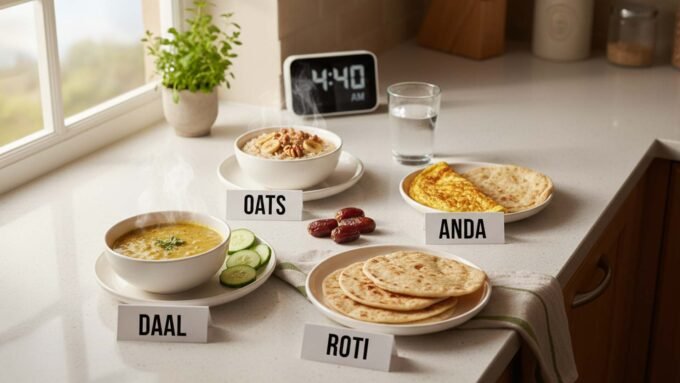
- Omelette + roti + yogurt
- Dahi chana bowl + dates + water
- Masala oats + boiled egg
- Light daal + roti + cucumber slices
- Leftover chicken/keema wrap + yogurt sauce
- Banana-date lassi + handful of nuts (best when you can’t eat heavy)
If you want more quick options you can rotate through the week, this guide is built exactly for that: Quick sehri recipes
What to Avoid at Sehri (If You Want Energy, Not a Crash)
You don’t have to “ban” anything, but these are the common energy-killers:
Very salty sehri
Pickles, salty snacks, and heavy seasoning often lead to extra thirst, which makes fatigue feel worse.
Fried food every morning
A fried sehri might feel satisfying, but many people feel sluggish later when it becomes a routine.
Sugary-only sehri
If sehri is tea, biscuits, and something sweet, your body gets a quick spike, then a hard drop.
Too much caffeine
Tea and coffee can be fine, but if they replace water, energy suffers. Caffeine late at night can also disrupt sleep.
Hydration Strategy That Supports Energy
When people say “I feel weak,” dehydration is often part of it.
A simple approach:
- drink water at iftar
- drink water again after your meal
- sip water through the evening
- drink steadily at sehri
Also, foods like yogurt, fruit, and oats support hydration better than relying on drinks alone.
If you want a full hydration routine with desi drink options, this is useful: Hydration in Ramadan
Sehri for Different Routines
Students
Keep sehri fast and consistent. Oats + yogurt + banana, or eggs + roti, is enough to feel stable through lectures.
Working professionals
Protein matters more when your day is long. Egg-based sehri or chana/daal-based sehri reduces the mid-day crash.
Elderly family members
Softer foods often work better: oats, yogurt, light daal, and fruit. Keep spice and salt moderate.
People doing physical work
Increase protein and hydration-friendly foods, and avoid salty snacks at night. Your body feels the fast more when you’re active all day.
Grocery Checklist for Energy Sehri
If these are stocked, sehri becomes simple:
- eggs
- yogurt
- oats
- whole wheat roti/atta
- chana/daal
- bananas + seasonal fruit
- cucumbers
- nuts or peanut butter
- dates
For full Ramadan planning beyond sehri, including iftar essentials and weekly restocks, use this as your base: Ramadan grocery list UK
Final Thoughts: Consistency Beats Perfect Sehri
Ramadan fatigue doesn’t usually come from fasting itself. It comes from an unbalanced sehri, poor hydration habits, and routines that don’t match modern schedules.
The fix is simple:
- include protein
- choose slow carbs
- add yogurt/fruit/cucumber
- keep salt and sugar lighter
- drink water steadily between iftar and sehri
Do that consistently for a few days and most people notice a real difference in energy, mood, and focus.
If you want, I can also add SEO data + a unique Shopify feature image prompt for this article (not repeating previous visual styles).











Leave a comment